If spotting a leopard tops your list, booking a Yala safari is one of the best single-day wildlife options in Sri Lanka. This guide walks through a typical Yala safari day trip: which animals you’re likely to see, how lagoons and scrub shape sightings, and why skilled trackers and drivers matter. You’ll also find typical price ranges and practical booking notes so you arrive prepared. Plan early, pick the right time window and set realistic expectations.
Use these pointers to choose the best season, block and vehicle for your priorities, whether you want a high-probability leopard run, a photo-focused visit or a family-friendly, comfortable day out. Practical checklists and sample itineraries follow to help short-stay travellers and wildlife lovers make the most of a single-day Yala safari.
What you need to know
A few practical points shape your day and your chances of sightings. Keep these in mind as you book and pack for a Yala safari day trip.
What to expect on a Yala safari day trip
Expect an early start and plenty of off-road stretches when you take a Yala safari. Trackers and drivers move deliberately between waterholes, open scrub and coastal patches to maximise sightings and manage vehicle flow. Jeeps often pause for extended observation, so keep cameras ready and wear neutral colours to avoid spooking animals.
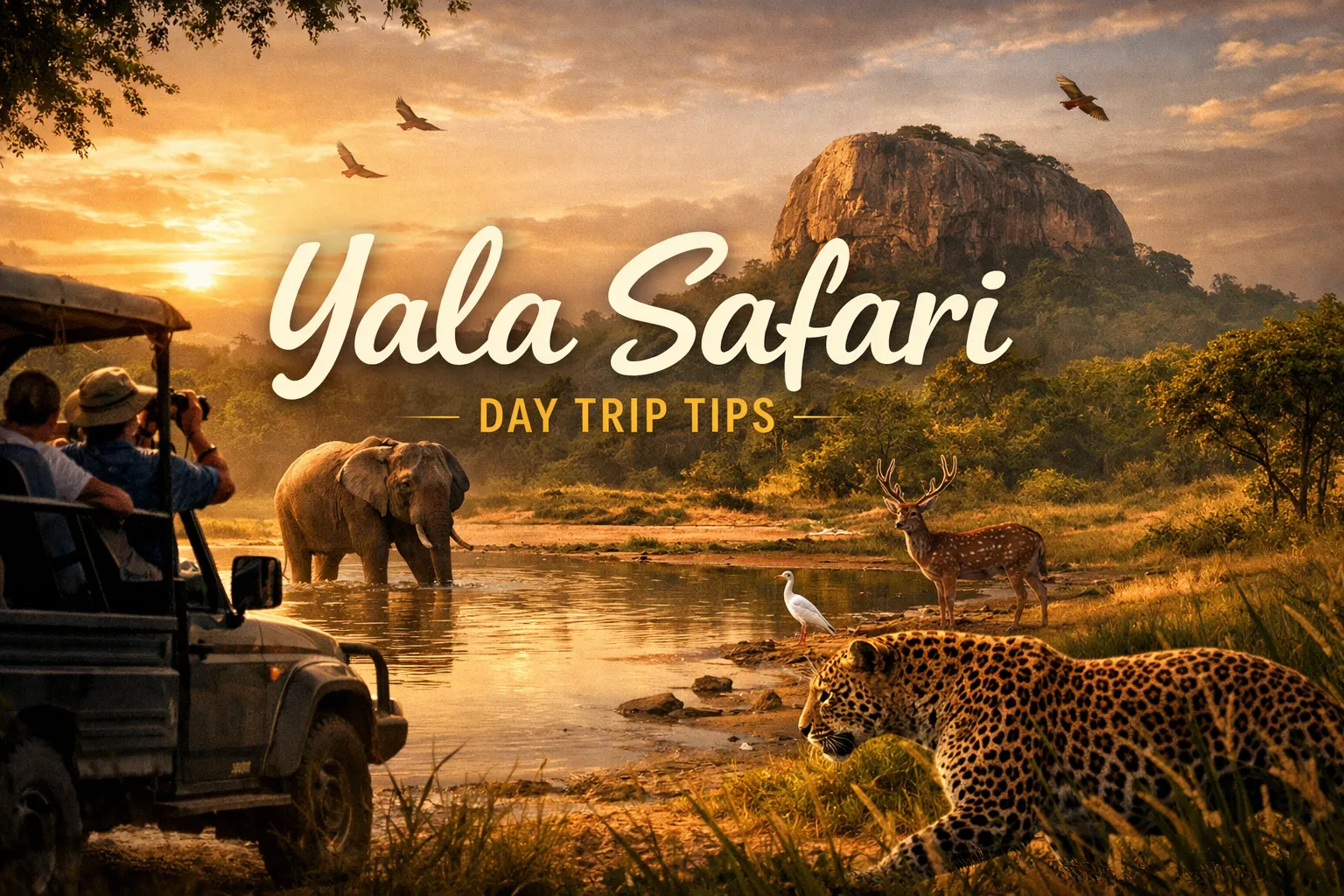
Key species to watch for include leopard, Asian elephant, sloth bear, crocodile, water buffalo, spotted deer, wild boar, jackal and many water and shorebirds. Lagoons and marshes concentrate waterbirds, crocodiles and buffalo, while elephants and deer browse scrub and grasslands. Because Yala has a relatively high leopard density, patient watching often pays off.
When to go: best months and daily windows for a Yala safari
Season and time of day have the biggest impact on sightings. For leopard-focused visits, target the dry season from February to June, with February and March generally most reliable. Later in the dry season, higher temperatures push animals into shade at midday while shrinking water sources concentrate wildlife at remaining waterholes, improving visibility.
Shoulder months offer trade-offs. July–September and November–December usually mean fewer jeeps and greener scenery, which some travellers prefer, but occasional rain can thicken vegetation and make tracks muddy and sometimes prompt temporary block closures, so check park notices before you book.
Daily windows matter too. Sunrise and late-afternoon sessions deliver the best predator activity, so arrive at the gate for first light or plan to be inside the park for the last couple of hours; a half-day morning is the most efficient choice for short-stay travellers chasing active wildlife, while a full-day trip covers more habitats.
Which park blocks, gates and timings boost your chances
Where you enter and which block you choose shape sightings more than luck alone. Block 1 has the highest leopard concentration and attracts more jeeps for that reason, while Block 5 and areas near Kumana tend to feel quieter and more open, suited to visitors who prefer space over guaranteed sightings.
Common gates are Palatupana and Katagamuwa, both convenient from Tissamaharama and nearby hotels. Galge and a few smaller gates often see less jeep congestion. Travel time from Tissamaharama to gates ranges from about 20 to 45 minutes, so coordinate pickup times to avoid long waits and confirm gate access with your operator.
Fewer vehicles at quieter gates amplify the benefits of sunrise and late-afternoon windows, so ask your operator about less-used entry points when you confirm your slot. The park usually opens at 06:00 and closes at 18:00, but seasonal closures or block restrictions do occur and may affect access. For practical advice on positioning, tracker behaviour and simple strategies to maximize your chances on a leopard safari, consult a field guide that covers tracker techniques and vehicle etiquette.
Sample itineraries to maximise sightings (half-day to full-day)
If you have only one session, choose the morning for peak activity: typical timing is pickup around 04:30–05:15, gate arrival by 05:45 and in-park time from 06:00 to about 10:00, returning to your hotel by late morning. For an afternoon option, plan pickup late morning with an in-park window around 13:00–18:00 to catch golden-hour movement and light for photos.
Stacking two shorter sessions raises your odds more than a single run. A practical full-day rhythm is an early morning 06:00–10:00 session, a midday rest near the ticket centre or at your hotel to avoid the heat, then re-entry for a 13:30–17:30 or 14:00–18:00 afternoon session. Two sessions cover different habitats and movement patterns and allow trackers to reposition following fresh sightings. If you prefer curated options, check out JK Travels’ selection of best safari tours in Sri Lanka to compare full-day and shared alternatives.
Arrive early to secure good parking and be prepared to wait 20–60 minutes or longer when animals shelter; sometimes jeeps sit quietly for an extended time to observe a confirmed sighting. Pack snacks, shade and water for children and keep communication open with your tracker. Remaining flexible pays off because wildlife moves unpredictably and patience often rewards you with memorable encounters.
Costs, permits and smart booking logistics
Yala safari fees come from a few clear sources: the foreign entrance charge set by the Department of Wildlife Conservation, jeep hire or package rates, and any local taxes or gate surcharges. Foreign entrance fees typically range around USD 42 per person, depending on block and visitor mix, while jeep-inclusive day tours commonly run from about USD 46–99 per person or higher for private vehicles. Verify exact LKR figures and taxes with the Department of Wildlife Conservation before final payment. For a detailed breakdown of typical Yala safari costs and examples of entrance fees, see a dedicated cost guide.
Jeep hire can be a shared seat in a pooled vehicle or a private 4×4 for your party. Packages often bundle the entrance fee, driver and tracker, fuel and a limited pickup zone, and typical inclusions are an experienced tracker, pickup within a few kilometres of gates and a maximum of six passengers in private jeeps. Permit costs are commonly integrated into the advertised entrance fee.
Private safaris cost more but give better timing control, fewer distractions and superior photo opportunities at dawn and dusk. Shared jeeps lower the price but mean multiple vehicles at hotspots and less flexibility on arrival times. Book through WhatsApp or email with a trusted operator, via your hotel desk or on reputable platforms and avoid paying full cash at the gate without a receipt. You can also purchase official park entry tickets in advance through established ticketing services to streamline gate entry.
- Confirm total Yala safari price in LKR and USD, taxes included
- Ask which gate and block are used and the confirmed entry time
- Check passenger limit for the jeep and tracker availability
- Get a written pickup time, vehicle details and a contact number
Packing, photography and on-safari etiquette
Pack light but smart: photocopies of ID, neutral clothing and a hat will cover the basics, while small extras like sunblock and insect repellent make the day more comfortable. Bring binoculars, a refillable water bottle and motion-sickness tablets if needed, and use a small daypack to keep essentials within reach.
- Sunblock and insect repellent
- Refillable water bottle, snacks and motion-sickness tablets
- Binoculars, a small daypack and photocopies of a passport or ID
- Neutral-coloured clothing and a hat
For photography, prioritise reach and stability. Recommended setups include a 200–600mm lens on a full-frame body or a 100–400mm on a crop sensor with a monopod for long shots; use a fast shutter speed, burst mode and single-point autofocus to catch distant cats. Smartphone users should move closer where safe, keep horizons level and shoot short bursts to capture movement.
Respectful behaviour improves the experience for everyone. Always follow your guide’s instructions, keep voices low and remain seated unless instructed otherwise, and never feed or provoke wildlife. Tipping trackers and drivers is customary and appreciated; a modest tip at the end of the day rewards local expertise and supports the people who make sightings possible.
Ready for your Yala safari day trip?
Make three clear choices before you book: select the right season and time of day, pick the park block and gate that match your goals, and plan for a long, off-road day with lagoon and grassland viewing. Prioritise timing first because season and daily window most directly affect sighting odds. Then refine your plan by choosing the vehicle type and operator that suit your comfort and photo needs.
JK Travels Lanka PVT LTD’s Wildlife Safari builds private Yala safari day trips around season, block choice and experienced tracker-driver teams to improve your chances of seeing wildlife while keeping the day comfortable and safe. Message them on WhatsApp with your travel date, preferred pick-up town (Colombo, Negombo, Kandy, Dambulla or Sigiriya) and whether you want a sunrise or afternoon slot. They will reply with recommended gates, a customised itinerary and transparent pricing so you can book with confidence. For specific Yala activity details, see their Yala National Park, JK Travels Lanka page.