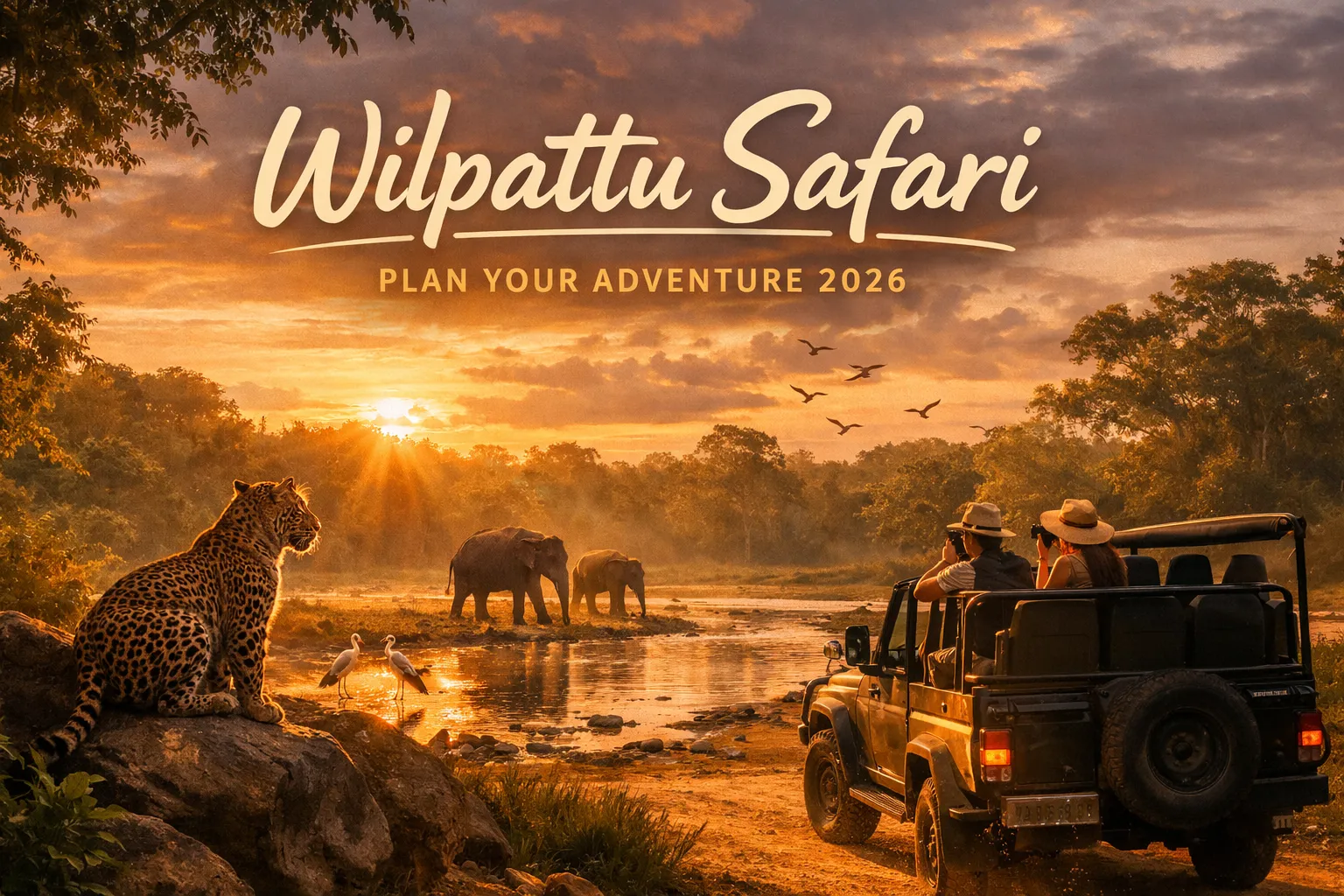
A safari in Wilpattu offers one of the best opportunities to see Sri Lanka’s large mammals and top predators across villus, seasonal lakes and dry-zone forest. During the dry season, leopards, sloth bears and elephants concentrate near shrinking water sources while water buffalo, crocodiles, sambar deer and many resident and migratory birds gather around the villus. This guide explains what to look for on a Wilpattu National Park safari, why villus and rivers are prime viewing habitats, and how to set realistic expectations so sightings feel achievable. Wilpattu National Park entrance tickets are charged separately from safari jeep hire. Confirm current Department of Wildlife Conservation entrance fees, ticket-purchase options and accepted payment methods for your travel date before booking. Experienced local guides use habitat cues to predict encounters.
Confirm current Wilpattu National Park opening hours, access conditions and your safari pickup time before travel. A half-day Wilpattu game drive usually lasts about four hours with pickups, while a full-day jeep safari runs from dawn into the late afternoon and raises sighting odds. Camping safaris are available if you want more time inside the park. Use the sections below to choose the right rhythm, timing and operator so you don’t miss wildlife windows.
Quick summary
- Best season: May to September (dry months) concentrates wildlife around villus for the highest sighting chances; February to April is greener and quieter for birding and softer light.
- Safari type: Half-day for tight schedules; full-day or camping safaris increase encounters; private jeeps give flexibility and a tailored pace.
- Timing & logistics: Confirm current Wilpattu National Park opening hours, access conditions and your safari pickup time before travel.
- Costs & permits: Wilpattu National Park entrance tickets are charged separately from safari jeep hire. Confirm current Department of Wildlife Conservation entrance fees, ticket-purchase options and accepted payment methods for your travel date before booking.
- Packing & booking: Bring a compact photo kit, water and sun protection; follow park rules and book vetted operators with local chauffeur-guides. Confirm details by WhatsApp or email before paying a deposit.
What to expect on a Wilpattu safari
Start with realistic expectations about wildlife, timing and travel. A safari in Wilpattu rewards patience more than guarantees; sightings come from following the park’s rhythms and focusing on key habitats rather than ticking boxes. Pay attention to timing and habitat cues so you know where to look, when to be at the gate and how much time to budget for close encounters.
Guides concentrate on villus, lakes and rivers because animals gather there in the dry season when shrinking water makes tracking more predictable. Watching these spots and reading tracks often leads to the closest encounters.
The park is large but the layout is straightforward, with main gates and internal tracks suitable for 4×4 vehicles; some routes are bumpy.
Best time for a safari in Wilpattu
Choose season based on what you want to see. May to September is the dry season when animals concentrate around villus and sighting rates are highest, making it the top window for big-game viewing. February to April is greener and quieter, which suits birding and offers softer light for photographers. October to January brings more rain and occasional access limits during monsoon windows, so many short-stay visitors prefer the dry months for predictability.
Time of day matters as much as season: dawn and dusk are peak movement periods and low light gives cleaner photos and silhouettes. Confirm current Wilpattu National Park opening hours, access conditions and your safari pickup time before travel. For camera gear, a 100–400mm lens is ideal and 70–200mm is the minimum for general wildlife shots; use faster shutter speeds, continuous autofocus and stabilize the camera on a beanbag or monopod inside the jeep.
Weather can change the game. Heavy rain makes tracks muddy and some villus unreachable, which reduces sighting chances and may force route changes. Confirm contingency plans with your operator and book flexible or private safaris so guides can reroute or extend time when conditions improve.
Choosing between half-day, full-day, private and camping safaris
Pick a half-day if your schedule is tight, your budget is limited or you want a focused morning or late-afternoon session when animals are active. Half-day drives typically last 3–4 hours and are ideal for short-stay travellers and families who need a compact outing. Typical 2026 price bands for a half-day are approximately USD 30–136 per adult, but check whether entrance tickets are included in any quoted package. Wilpattu National Park entrance tickets are charged separately from safari jeep hire. Confirm current Department of Wildlife Conservation entrance fees, ticket-purchase options and accepted payment methods for your travel date before booking. Expect a lower probability of sightings than on a full-day because you cover less ground.
A full-day safari suits serious wildlife seekers and photographers who want higher odds of seeing leopards, sloth bears and concentrated birdlife. Full-day drives last 6–12 hours and give drivers the flexibility to follow tracks and wait at productive spots; 2026 prices generally range from USD 95–235 per adult. Compare detailed breakdowns since some packages add vehicle entry, service charges and VAT on top of advertised rates.
Private vehicles work well for photographers, couples and families with young children who need a tailored pace and route. When split among 2–6 passengers the per-person cost can be similar to upper-range shared tours while offering more control over stops and timing. If you prefer operator-specific details and options for private jeeps and itineraries, check a specialist wilpattu safari listing from JK Travels.
Camping and multi-day safaris reward dedicated wildlife watchers but add complexity and cost. You must arrange camping permits, follow park overnight rules and budget for higher guide and logistical fees. Multi-day or luxury packages commonly start from a few hundred dollars per person and increase with guide level, meals and transfers. If you want to chase rare light, nocturnal behavior or extended birding, a camping safari at Wilpattu can be worth the investment.
Costs, permits and what’s included (2026 figures you need to know)
Many operators bundle the government fee into their packages, but operator charges cover separate services. Typical inclusions from a Wilpattu operator are:
Wilpattu National Park entrance tickets are charged separately from safari jeep hire. Confirm current Department of Wildlife Conservation entrance fees, ticket-purchase options and accepted payment methods for your travel date before booking.
- Jeep or vehicle hire with driver/guide
- Park entrance fee and vehicle entry (sometimes shown separately)
- Fuel and guide service charge
- Meals on full-day transfers and any permit handling
Expect combined 2026 pricing roughly as follows: half-day USD 30–136, full-day USD 95–235, with private options varying by pickup location and vehicle. Operators collect vehicle hire, guide fees, fuel and VAT while the park authority collects entrance and permit charges. Always ask whether the quoted price is all-in or a base rate plus the official park permit and request a written inclusions list before you pay a deposit. Confirm vehicle entry, VAT, tolls, extra-hour rates, meal costs and cancellation and refund terms in writing.
Practical tips for the day: packing, photography and park rules
Preparation makes the day run smoothly. Charge batteries the night before, pack a compact kit and confirm pickup times, meeting points and contact numbers with your operator to avoid surprises.
Essential items to tuck into a daypack include binoculars and a long lens (100–400mm ideal; 70–200mm minimum), spare camera batteries and memory cards, neutral-colored clothing, a sun hat and sunscreen, a refillable water bottle, snacks, insect repellent, motion-sickness medication, a passport copy and small local cash for tips. Toilets are limited at entry points and some rest stops, so plan accordingly and carry a small first-aid kit for minor issues.
For photography keep settings practical for moving subjects: use shutter speeds of 1/500s–1/1000s as needed, set continuous autofocus and a high frame rate if available, and stabilize gear on a beanbag or monopod inside the jeep. Compose with room in front of moving animals, try low angles from the vehicle for more dramatic shots and rotate shooting so everyone in the vehicle gets turns without disturbing wildlife.
Follow these essential park rules to stay safe and respectful. These rules protect you and the animals.
- Stay in the vehicle unless your guide says otherwise.
- Do not feed or approach animals, do not litter and avoid open fires.
- Follow your guide’s instructions and obey park signposts at all times.
Keep children close, disclose health issues to your guide and in an emergency contact the driver and park office immediately. Make sure your guide carries a basic communication device and first-aid supplies.
How to book the right Wilpattu safari: step-by-step checklist and operator selection
A short booking playbook helps avoid last-minute problems. Follow the checklist, ask direct questions and use the evaluation signals below to separate reputable operators from risky choices so your safari in Wilpattu runs smoothly.
Start by working through the numbered checklist before you commit; it keeps payment, permits and logistics clear so you can focus on sightings and photos. It also gives you a written record to refer to on the day.
- Choose a date and preferred time (morning or afternoon session).
- Confirm park fees and which items are included in the quote.
- Verify vehicle type, air-conditioning and guide language.
- Request proof of permit and vehicle entry authorization.
- Confirm pickup/drop-off locations and exact times.
- Ask about cancellation, refund policy and emergency plans.
- Pay the deposit and get written booking confirmation and a receipt.
Vet operators with direct questions: is the jeep open or closed-top, do they provide an experienced naturalist guide, what is the maximum group size and is the vehicle insured? Request recent reviews or photos and check TripAdvisor and GetYourGuide for up-to-date feedback. Operators who bundle permits, transfers and clear invoices are usually the least stressful for short-stay travellers and families.
JK Travels Lanka PVT LTD lists private, air-conditioned transfers, experienced chauffeur-guides familiar with villus and leopard hotspots, clear pricing and fast WhatsApp or email support (info@jktravelssrilanka.com).
For broader planning and seasonal advice, consult an expert guide to Wilpattu’s habitats and timing when you’re comparing operators: a useful reference is the Wilpattu planning guide, which summarises seasons and viewing hotspots.
Final steps for a safari in Wilpattu
Planning a successful safari in Wilpattu comes down to three simple choices: when you go, which safari type you book, and how you set expectations for sightings. Pick the right season for your goals, choose the safari length and vehicle that fit your pace, and confirm permits and pickup times so logistics do not eat into wildlife hours. After those priorities are set, decisions about packing, camera gear and permit timing fall into place quickly.
If you’re travelling from Colombo and prefer a dedicated transfer, consider booking a specialist option such as a Wilpattu Safari Tour from Colombo to simplify timing and transfers.