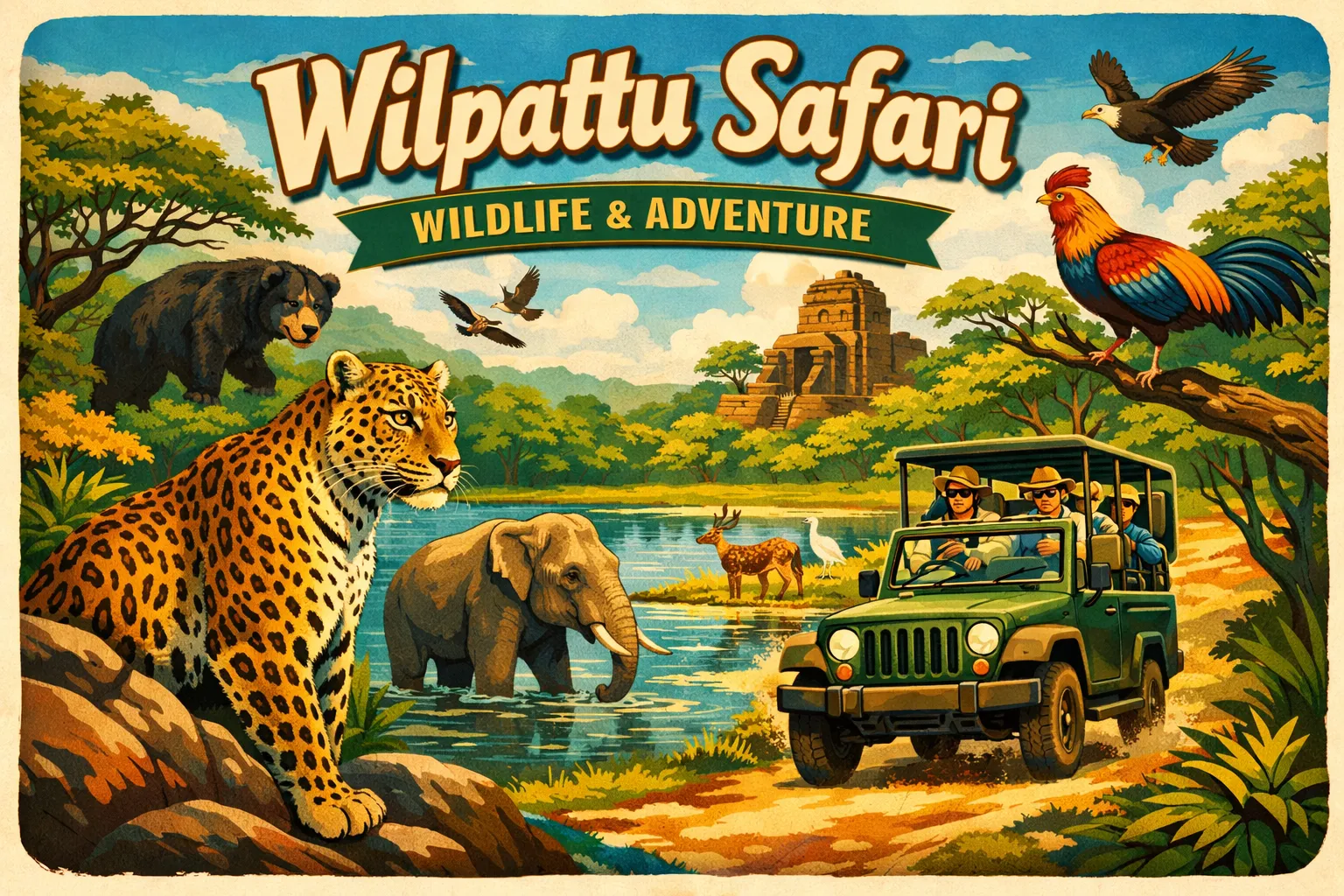
A wilpattu safari gives you good odds of seeing leopards, elephants and endemic birds because the park’s villus draw wildlife to predictable waterholes. This guide explains what to expect on a Wilpattu National Park safari, how a typical jeep game drive runs, and the practical booking and cost details you need to avoid surprises. It also includes quick wildlife checklists, game-drive tempo notes and sample 2026 prices so you can plan an efficient day trip.
Quick summary
- Best time to go: May to early September is the clearest dry-season window for concentrated sightings at the villus; February to April is a useful secondary period. Aim for dawn and late-afternoon drives for the best chance at predators.
- Top sightings: Leopards, elephants, sloth bears, sambar and spotted deer, crocodiles and many endemic birds gather around waterholes. Patient scanning and local knowledge usually turn those hotspots into regular encounters.
- Choose your safari: Private 4x4s give timing and photographic control; shared tours lower cost but reduce flexibility and privacy. Camping or multi-day stays suit visitors who want early starts and nocturnal listening.
- Costs & permits: Wilpattu National Park entrance tickets are charged separately from safari jeep hire. Confirm current Department of Wildlife Conservation entrance fees for your travel date and visitor category before booking.
- Packing & behaviour: Bring binoculars, a 200–400mm zoom if possible, sun protection and cash; stay inside the vehicle and follow your driver and tracker at all times. Quiet, patient observation produces the best photo opportunities.
What to expect on a Wilpattu safari
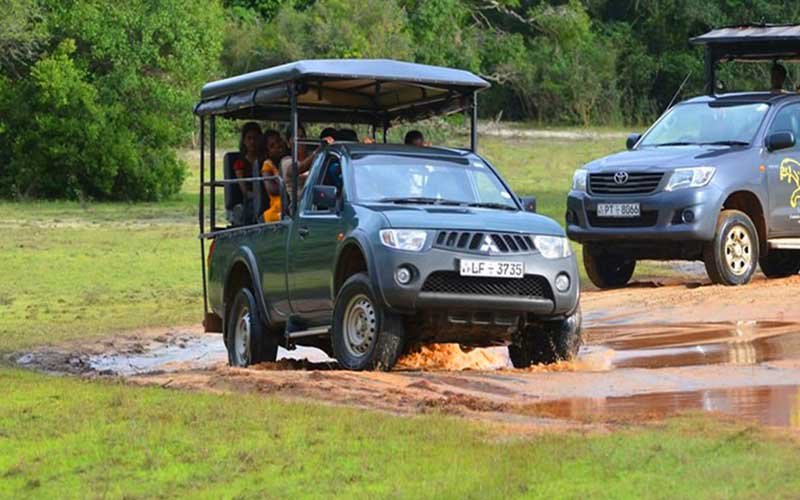
A typical jeep safari follows a slow, observational rhythm: long scans across a villu, careful approaches and quiet waits at promising spots. Drivers often act as trackers and a dedicated naturalist adds value for birders or anyone wanting detailed behaviour notes. Sightings are never guaranteed, but the right driver, timing and patience noticeably raise your odds and photo chances.
Choosing your safari: private, shared or camping
Private day safaris are the best option for short-stay travellers who want control over schedule and photo time. A private 4×4 lets you set pickup times, spend longer at sightings and avoid the disruption of larger groups—useful for couples, families and photographers. Wilpattu National Park Safari, Book Wilpattu Safari Tour 2025 offers private Wilpattu day tours with air-conditioned transfers, experienced chauffeur-guides and optional naturalists, and can pick up from Colombo, Negombo, Kandy or Sigiriya to maximise park hours.
Shared group jeeps reduce per-person cost but come with fixed departures, larger groups and less flexibility during sightings. If budget is the priority, look for smaller shared groups and clear listings that state whether park and jeep fees are included. Read operator terms carefully so you avoid unexpected gate payments.
Camping or tented camps near the park entrance let you start earlier and listen for nocturnal activity, though authorised camps are usually outside the park boundary. These options cost more and need advance booking, making them better for multi-day wildlife trips than a single-day visit. For guidance on overnight stays and facilities, see choosing the right accommodation for your Wilpattu National Park safari. For a private day itinerary, a practical timeline is:
- Pickup between 04:30 and 05:30 to reach the gate at or before dawn.
- Dawn drive roughly 06:00–10:00, then a lunch break outside the park.
- Optional afternoon drive around 15:00–18:00 before returning to accommodation.
Drive times affect the schedule: expect about 3–5 hours from Colombo and 1–2 hours from Sigiriya. Choose a nearby base to reduce same-day travel and fatigue and to allow earlier starts.
Best time to visit and how to time your sightings
May through early September is the clearest window for concentrated dry-season sightings, when scrub thins and animals cluster at the villus. February to April offers a secondary window with broader activity, while October to December can bring heavy rains that limit access and visibility. For short visits book at least one dawn drive since predator activity and park openings align with early light.
Dawn and dusk are the most productive periods for predators and active mammals, so a morning outing or a full-day option that includes the late afternoon boosts encounter odds. Guides watch reliable hotspots such as Maradanmaduwa, Kumbuk Villu and Palu Villu and adjust routes with changing water levels and vegetation. If you can manage two half-days or a full day you cover both activity windows and improve your chances. For an expanded discussion of seasonal leopard activity and timing, see the best time of year to visit Sri Lanka for leopards.
Reserve early-morning slots well before peak months and confirm whether a naturalist is included with your jeep hire. Park permits and popular jeep hires book fast in high season, so lock in pickup times, vehicle details and guide arrangements before you travel. Local knowledge of the villus makes a real difference to the quality of a wilpattu safari.
Costs, permits and typical Wilpattu safari prices (2026)
Wilpattu National Park entrance tickets are charged separately from safari jeep hire. Confirm current Department of Wildlife Conservation entrance fees for your travel date and visitor category before booking.
JK Travels’ local Wilpattu safari costs USD 60 total per private jeep for 1–6 passengers, including nearby hotel pickup and drop-off and a safari driver. National park entrance tickets, meals and personal expenses are extra. Road transportation from Colombo is offered as a separate tour. Other operators’ prices and inclusions vary; request a current itemised quotation rather than relying on undated market price ranges.
Typical inclusions often cover a private jeep with a licensed driver/tracker, pickup and drop within a defined radius and bottled water; some full-day pickups include lunch. Common extras include park entrance and jeep gate fees (if not bundled), naturalist fees, long-transfer fuel surcharges, extra meals and gratuities.
To reduce costs without sacrificing sightings, travel in groups of three to four to lower per-person jeep hire and book morning wilpattu safari slots directly with reliable local operators to avoid platform markups. Avoid last-minute bookings in peak months and ask about a driver’s experience with villus navigation and leopard sightings when comparing companies. Confirm whether park fees and naturalist costs are included so you don’t face surprises at the gate.
Getting there: transfers, travel time and logistics for day trippers
The quickest door-to-door option from Colombo is a private drive via the A6 through Negombo and Puttalam, taking roughly three to three and a half hours depending on traffic. Train travel plus a local transfer adds time and last-mile complexity. Confirm current fares and request a separate quotation for private road transfers. For single-day trips a private transfer saves time and removes the hassle of coordinating multiple connections. See the Wilpattu Safari Tour from Colombo, National Park Safari Tour for a sample itinerary and pickup options.
Anuradhapura and Puttalam are practical bases for a Wilpattu National Park safari. Anuradhapura sits about 1.5–2 hours away and works well for an overnight stay followed by a morning run, while Puttalam is the closest town at roughly 45–60 minutes and suits the shortest approach. Choosing a nearby base reduces same-day driving and gives more flexibility for earlier starts or a relaxed return.
Park gates usually open around 06:00 and close near 18:30, so expect early departures and late-afternoon returns and a short rest or lunch stop outside the gate. Always confirm pickup and drop-off points, luggage allowances and whether your accommodation falls inside the operator’s free pickup radius. For up-to-date gate times and visitor rules consult the official visiting information. Allow a buffer for traffic and seasonal road conditions, as rural routes can add 20–40 minutes during heavy rain.
Packing, photography and on-safari behaviour to maximise sightings
Pack essentials to stay comfortable and ready for sightings: binoculars, a camera with a 200–400mm lens if possible, neutral-coloured clothing, sun protection, a refillable water bottle, insect repellent and a small first-aid kit. Keep colours muted to avoid spooking wildlife and bring a power bank to keep devices charged. Having the right kit saves time and improves your chances at a close encounter.
For leopard and low-light photography use long glass, steady technique and continuous autofocus when subjects move. Aim for shutter speeds at or above 1/500s for moving animals and raise ISO rather than underexpose; never use flash around wildlife. Use the jeep’s roof hatch or window frames as stable supports and rely on patience—many great wilpattu safari photos come from long, quiet observation while the driver adjusts angles for the light.
Behaviour on the drive matters for safety and sustainability: stay quiet, follow your guide’s instructions and do not leave the vehicle. Carry out all litter and avoid actions that could disturb animals or other visitors. Tips are discretionary; decide whether to tip according to the service received.
Plan your Wilpattu safari with confidence
To book, choose a pickup point and travel date, then contact wilpattu safari, JK Travels Lanka PVT LTD on WhatsApp, email, IMO or Viber for a tailored itinerary and firm quote. Provide your preferred pickup location, number of people and whether you want a naturalist so the operator can confirm vehicle type, guide experience and total cost. Booking early secures dawn slots during peak season and gives you the best chance at the sightings you want.